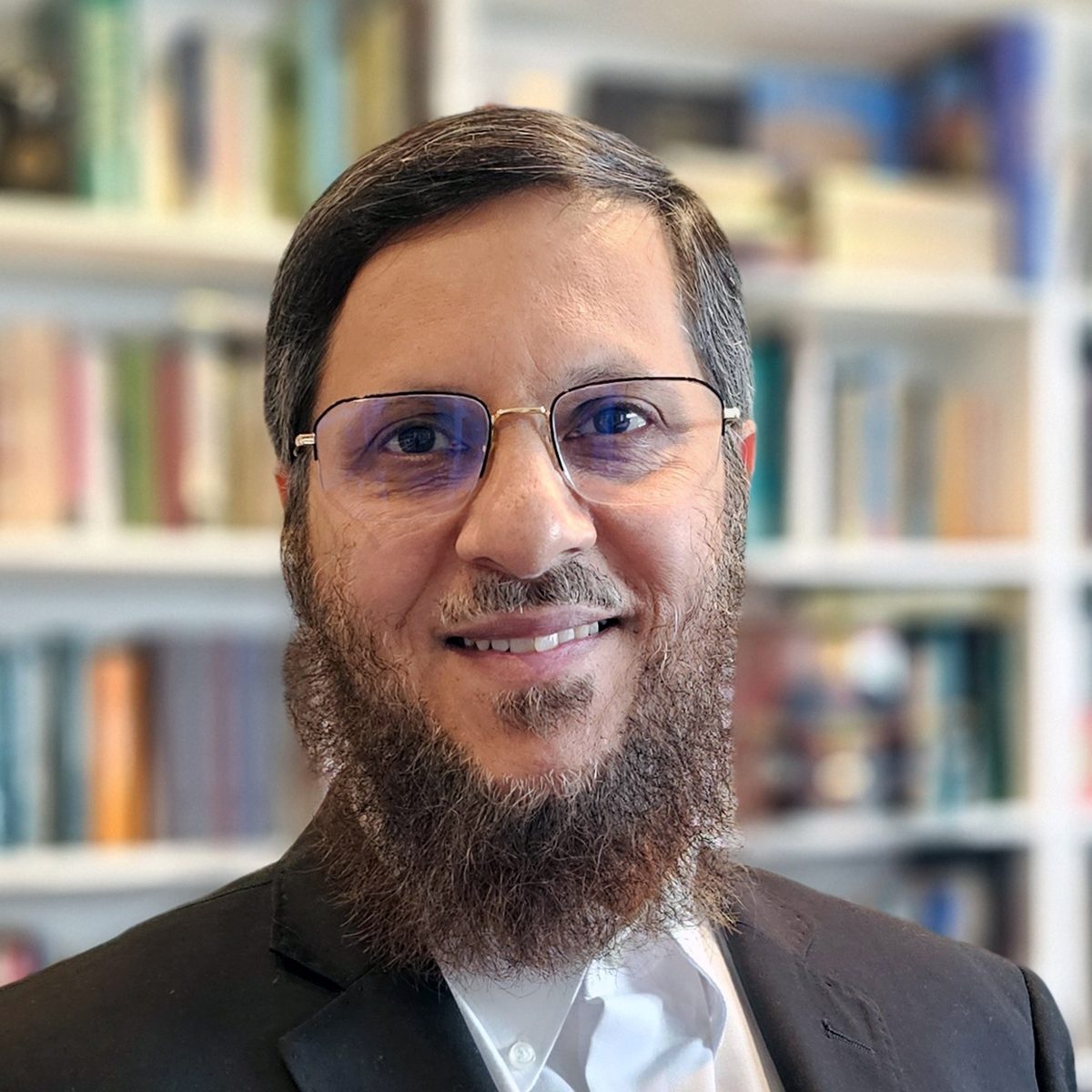
Asim Javed

Speaking

Helping people and institutions make deliberate choices about AI.

AI strategist, author, and speaker. I connect the dots across technology, power, and society, and make complex shifts simple enough to act on.

Three talks

One societal, one for the people adopting AI inside organizations, and one that looks toward a more conscientious use. The outlines Asim works from are longer. These are the public versions.

Societal

Were you asked?

The future of AI is already being decided. The useful question is who gave anyone that authority.

Audience. Conference audiences, boards, and civic forums that need the societal question in plain language before they talk about tools.

Artificial intelligence is already reshaping work, truth, and power. A few companies, and the governments that depend on them, make the choices everyone else then lives inside. This keynote follows how those decisions proceed without the people who live with them, what the public record shows, and what it means to choose on purpose rather than accept a later promise.

Takeaways

  • A system can work and still be put in place without anyone affected having a say. Capability is not consent.
  • The choices cluster. A few companies, and the states that depend on them, are writing terms other people have to accept.
  • What is worth asking for is a voice in the decision, and a real share in the result, not only a payment after the fact.

What the hour covers

  1. What is being decided, and who is not in the room
  2. How ordinary institutions lose the ability to check a machine
  3. Who holds the off switch
  4. What the people closest to the systems say in public
  5. Why a payment is not the same as a share
  6. The research map under the argument
  7. What a deliberate choice would name before it closes
Practitioner

Decide before you deploy

An organization does not adopt AI by buying a tool. It adopts AI by deciding who is allowed to choose.

Audience. Executives, transformation leads, and the practitioners who have to make AI work inside a real organization.

Leaders are told to adopt AI and rarely told which decisions are theirs. The session is for people who carry that choice. It separates the tool from the authority: what the institution is choosing, who has a say, and how to say it before a rollout hardens it. The grounding is enterprise AI training. It is not a client list.

Takeaways

  • Adoption is a sequence of choices. The tool is the last of them, not the first.
  • The people who feel the change are often not the people who signed for it. A rollout that cannot be explained to them is not finished.
  • The useful question inside an organization is who is allowed to decide, and what is still refused.

What the hour covers

  1. The decision in the room, before any demo
  2. The technical shift, separated from the authority
  3. One explanation a leadership team can repeat
  4. Why familiar planning frames no longer hold
  5. A way of working once those forces are the conditions
  6. The same muscle in a conference and in a training day
  7. The test before anything is deployed

Future-facing

A future with conscience

Consent asks who was consulted. Conscience asks what we owe once we know.

Audience. Leaders and public audiences who have accepted the diagnosis and want a standard for the choices still open.

The first question is who decided. The next is what a conscientious use of AI would refuse, protect, and share. This talk moves from choices already taken to a standard for the ones still open. It is the line behind Future With Conscience, a second book in research. Nothing is for sale yet, and no publication date has been set.

Takeaways

  • Being told is not the same as being asked, and being asked is not the same as answering for the result.
  • A conscientious standard can be said before a system ships: what is reserved for people, what is shared, and what is refused.
  • Deliberate choices are meant to be revisited. Accidental ones harden, and then they get described as inevitable.

What the hour covers

  1. The record, in one minute
  2. From consent to conscience
  3. Why a payment is not ownership
  4. The list an institution will not hide behind a vendor
  5. What Future With Conscience is, and what it is not
  6. One choice the room can still make

The practitioner talk uses EDGE and AI-Native, from a 2025 Scaled Agile white paper Asim co-authored.1 The full attribution is below.

Formats

Each talk can be given three ways.

  • Keynote

    45 minutes

    A single argument for a full room.

  • Workshop

    Half a day

    The same argument, worked through on the room's own decisions.

  • Fireside

    30 to 45 minutes

    A moderated conversation. One case, then the question.

Where he speaks

He speaks at conferences and events internationally.

Who I speak to

  • Conferences and public rooms

    A keynote for people who will live with the technology and have not been asked to decide it.

  • Leadership teams

    A session for executives who are adopting AI and need to know which choices are still theirs.

  • Practitioners

    A workshop for the people who have to make the system work, and explain it, inside an organization.

  • Fireside and moderated talks

    A conversation. One case, then the question. Useful when the room is small and the host wants to push.

Speaker kit

A one-page kit can be added here later. For now, the bios and the headshot are the kit.

Short bio

Asim Javed is an AI strategist, author, and speaker. He helps people and institutions make deliberate choices about artificial intelligence. He connects technology, power, and society, and explains complex shifts simply enough to act on. He holds an Oxford M.Sc. in AI, trains organizations so they get value from AI, speaks at conferences and events internationally, and edits The Consent Report.

Long bio

Asim Javed is an AI strategist. His strength is the long view: he discerns the pattern in a technical shift, connects it to power and to ordinary life, and explains it so that a person or an institution can choose on purpose.

He holds a master's degree from the University of Oxford, where his research was in computer vision, one of the leading areas of artificial intelligence at the time, well before the generative wave. He does enterprise AI training so organizations get value from AI. He speaks at conferences and events internationally.

As co-author and primary contributor to a 2025 Scaled Agile white paper, he introduced EDGE: Exponential, Disruptive, Generative, and Emergent, and AI-Native as a way of working once those forces are the conditions.

He is the author of Future Without Consent and editor of The Consent Report, a weekly briefing on who decides how AI reshapes daily life. A second book, Future With Conscience, is in research.

1 Asim served as a co-author and core contributor to both the EDGE and AI-Native frameworks, which were developed for and are solely owned by Scaled Agile, Inc. (SAI).

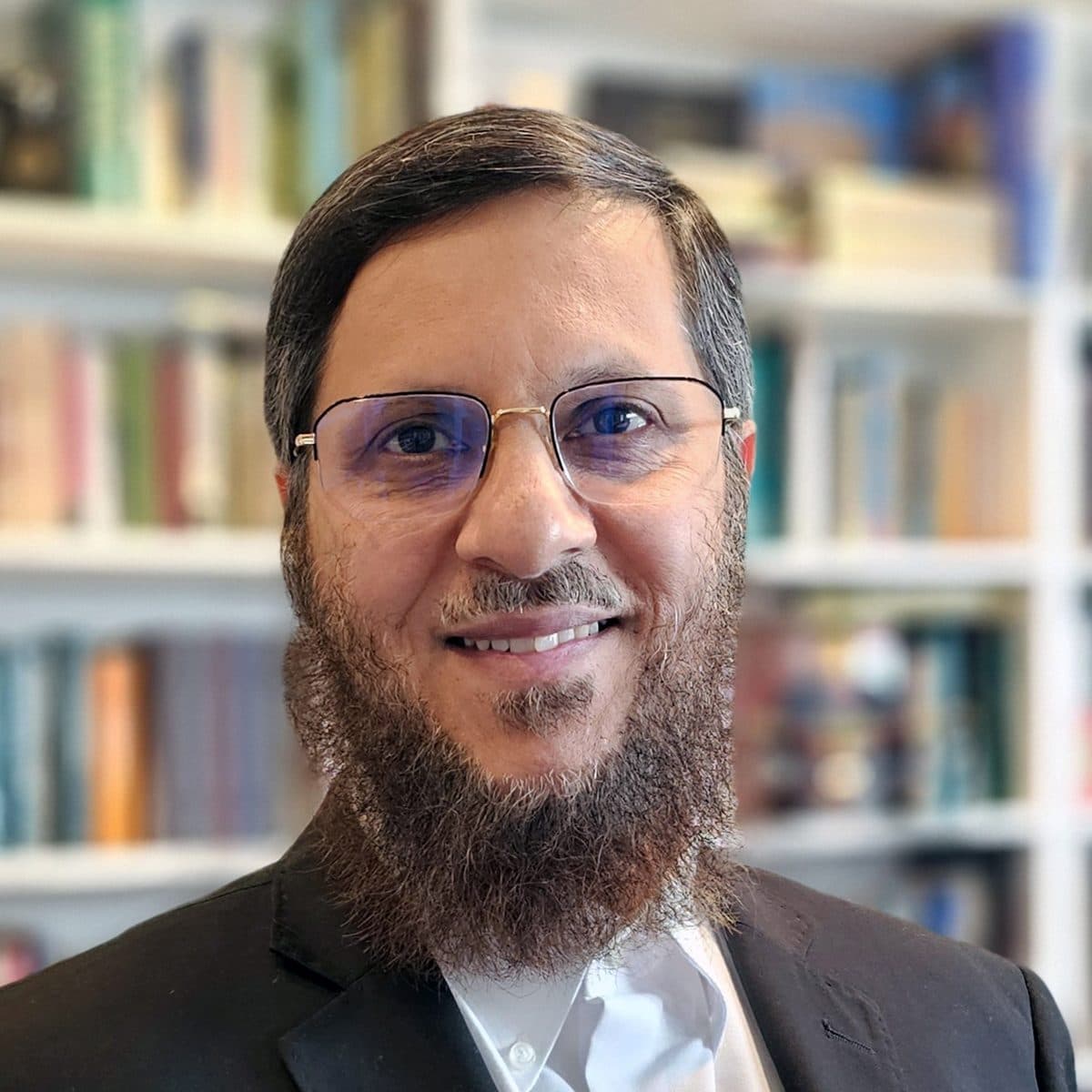
Portrait of Asim Javed.

Download the headshot

Inquire

Tell Asim the event, the date, and the room. A reply comes to the address you give.

Or write contact@asimjaved.ai.